
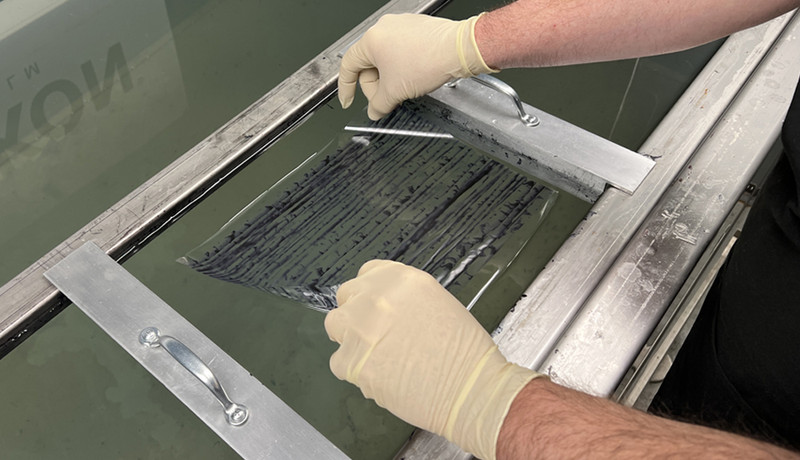
Water Quality for Hydro Dipping: Why Your Rinse Feels Slimy
May 12th 2026
If your rinse feels “slimy,” your prints look hazy after rinsing, or your results change from week to week, water quality may be the hidden variable. Hydro dipping depends on controlled film hydration and clean PVA removal, and your tank water can influence both.
This blog post explains how hard water and dissolved minerals can affect dipping and rinsing, what filtration can (and can’t) fix, and simple shop practices that keep results consistent.
What “slimy” usually means
Most of the time, a slimy feel during rinsing is simply PVA (polyvinyl alcohol) residue that has not fully rinsed away yet. Hydrographic film is designed to dissolve and rinse off after the dip, but PVA can cling longer when water conditions are not ideal or rinse technique is inconsistent.
It’s important to rinse until the surface no longer feels slick and the residue is gone. Some workflows also use a UV blacklight indicator method to confirm PVA removal on certain films.
How hard water can affect hydro dipping
Hard water contains higher levels of dissolved minerals (commonly calcium and magnesium). Those minerals can cause subtle issues in hydro dipping and rinsing, including:
- Slower or inconsistent PVA rinsing: residue may feel slick longer than expected
- Haze or film on the surface: minerals can dry as a faint deposit, especially if parts air-dry without a final clean rinse
- Variation between seasons: municipal water chemistry can change, and well water can shift with weather
Hard water is not always a deal-breaker, but it can make your process less forgiving.
Chlorine, pH, and “mystery” water changes
Municipal water often contains chlorine or chloramine, and pH can vary. For many shops, the biggest issue is not one specific number but inconsistency. If your results are perfect for weeks and then suddenly change, it’s worth considering whether your water source changed.
Signs water variability may be involved:
- Activator behavior feels different with no change in technique
- Rinsing takes longer than normal
- Film hydration seems “off” even when soak time is the same
Filtration options (what each one does)
There is no single filter that fixes everything. Here’s a practical breakdown of the most common options:
Sediment filtration (5–20 micron)
- What it helps: removes dirt, rust, and particulate that can contaminate the tank
- What it doesn’t: does not remove dissolved minerals that cause hardness
Carbon filtration
- What it helps: reduces chlorine taste/odor and some organic compounds
- Why it matters: can improve consistency for shops on municipal water
- What it doesn’t: does not reliably remove hardness minerals
Water softener (ion exchange)
- What it helps: reduces calcium and magnesium (hardness)
- When it’s useful: if you have very hard water and see haze or rinse inconsistency
- Tradeoff: replaces hardness minerals with sodium (usually fine for general shop use, but still not “pure” water)
Reverse osmosis (RO)
- What it helps: removes a broad range of dissolved minerals and improves overall water consistency
- When it’s useful: for shops that want the most stable, repeatable water quality
- Tradeoff: slower production of water and periodic maintenance
For many small shops, a sediment filter + carbon filter is a simple first step. If hardness is extreme, consider a softener or RO depending on your goals.
Tank habits that improve consistency (with any water source)
1) Keep the tank clean
- Skim floating debris and residue regularly
- Wipe down tank walls and edges where buildup forms
- Drain and refresh on a schedule that matches your workload
2) Control water temperature
Film hydration and activation depend on stable conditions. Big temperature swings can change soak behavior and rinse feel.
3) Avoid contaminating the rinse area
- Keep silicone sprays, dressings, and lubricants away from the rinse zone
- Use clean gloves and clean rinse water when possible
4) Rinse with intention
- Rinse evenly until the “slick” feel is gone
- If your water dries with spots, consider a final clean rinse or controlled drying process
Simple troubleshooting: when the rinse feels slimy
- First check: Are you rinsing long enough to fully remove PVA?
- Second check: Has your water source changed (seasonal, municipal adjustments, well variability)?
- Third check: Are minerals leaving a haze after drying (a sign of hard water)?
- Next step: Add sediment + carbon filtration and test again
- If problems persist: Consider softening or RO for more consistent water quality
Final tip: consistency beats perfection
You don’t always need “perfect” water, but you do need consistent water. If you control filtration, temperature, cleanliness, and rinsing technique, you eliminate one of the most common hidden variables in hydro dipping.
Want an easy starting point? Test your water hardness (a simple strip test works), then decide whether sediment/carbon filtration is enough or if you need softening/RO.