
Why Is My Hydrographic Film Not Activating?
Oct 15th 2025
If your hydrographic film is not activating properly, you are not alone. Activation issues are common and usually come down to a few tunable variables. Use this guide to diagnose the cause and fix it fast.
What “Activation” Means
During hydro dipping, printed film floats on warm water. When you spray activator, the clear PVA dissolves and the ink layer re-liquefies so it can wrap your part cleanly. If activation is off, the ink will not flow as intended.
Common Symptoms of Under- or Over-Activation
- Film stays rigid, cracks, or looks “dry.”
- Jagged or incomplete pattern transfer.
- Grainy, dull, or uneven color after the dip.
- Edges look fuzzy or the pattern “drifts.”
Top Reasons Your Film Is Not Activating (and How to Fix It)
1) Not Enough Activator
Too light a pass or moving the gun too fast leaves dry spots that never liquefy.
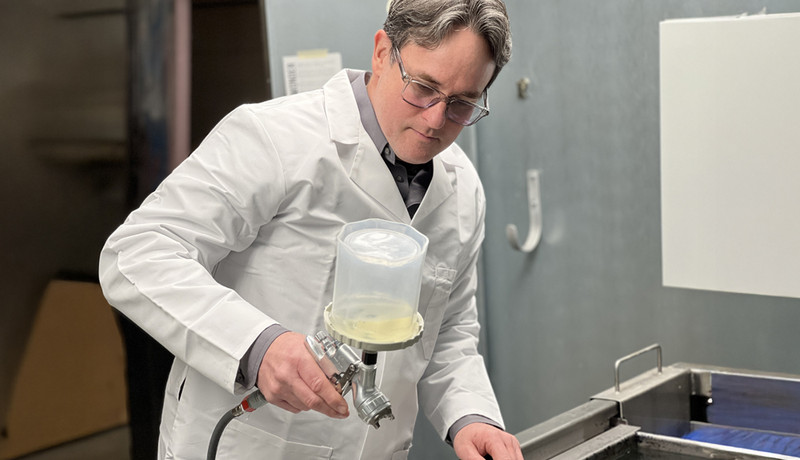
Fix: Apply an even coat with ~50% overlap, gun 8–12 in (20–30 cm) above the surface. Watch for the film to glass out to a uniform gloss within a few seconds.
2) Too Much Activator
Oversaturation can over-liquefy the ink, causing pattern distortion or color bleed.
Fix: Reduce pass speed or air pressure slightly. Aim for a smooth, glossy look without visible “running.” Practice on a test strip to find the sweet spot.
3) Water Temperature Off
Cold water slows softening. Hot water can over-expand or prematurely melt the film.
Fix: Maintain 85–95°F (29–35°C). Hydrokon typically performs best near 90°F with about a 60-second soak. Verify with a thermometer.
4) Incorrect Soak Time
Too short: PVA is not softened when you spray. Too long: the film stretches or tears.
Fix: Start at 60 seconds and adjust by ±10 seconds for your setup and humidity. The film should relax and lie smooth before activation.
5) Humidity and Storage Conditions
PVA is sensitive to moisture; film that is too damp or too dry behaves inconsistently.
Fix: Store at 65–75°F and 35–55% RH. Keep rolls sealed until use and let them acclimate to room conditions before printing or dipping.
6) Dirty or Hard Water
Oils or minerals interfere with uniform activation and ink flow.
Fix: Use clean, filtered water. Change water more often with higher volumes or oily parts.
7) Film Orientation / Backer Not Removed
Placing the film upside down or forgetting to remove the clear backer prevents proper activation.
Fix: Wet a fingertip and touch a corner: the tacky side is the printed side and should face up. Hydrokon includes a clear polyester backing—remove it before floating the film.
How to Test for Proper Activation
- After spraying, the film should become uniformly glossy and relax.
- Small wrinkles flatten out within a few seconds.
- The pattern looks fluid but not runny.
If unsure, dip a small scrap first to confirm before committing your main part.
Why Use Hydrokon Water Transfer Film
- Clear polyester backing for flat printing and consistent removal.
- Built-in fluorescent indicator to check for residue under UV light.
- Balanced film chemistry for reliable activation at standard soak temps.
- Made in the USA manufacturing for quality and consistency.
Activator Compatibility:
Hydrokon works with a range of activators, but choosing the right one depends on the type of ink you’re using:
- Latex-based inks: Activator A is not required.
- Pigment-based inks: Activator A is required—without it, the inks will separate on the water and fail to adhere properly.
For small-scale or hobby use, Rust-Oleum Clear Lacquer Spray can serve as Activator A. Another option is using a clear basecoat or intercoat, such as those offered by many hydrographic paint suppliers.
When selecting a primary activator, Hydrokon performs best with “cool” activators such as:
Final Thoughts
Most activation problems come down to application amount, water temperature, and soak time. Dial those in and use a consistent film like Hydrokon to achieve smooth, vibrant transfers with fewer rejects.
Related reads: Hydro Dipping 101 · Why Print Your Own Hydrographic Film